
Several factors have combined to increase Singaporean interest in Japanese real estate: exchange rates, property ownership rules, market changes and personal familiarity with Japan. The appeal is real, but every property still needs to stand on its own fundamentals.
As an expert who has guided many investors through this market, I’ve answered some of the most pressing questions in this comprehensive guide. Here’s what you need to know.
JIM TAY / JAPAN PROPERTY Explore Japan property with more clarity. Explore Tokyo developments, investment insights and practical guidance for Singaporean property buyers.1. The “Perfect Storm”: Why Are Singaporeans Buying in Japan Now?
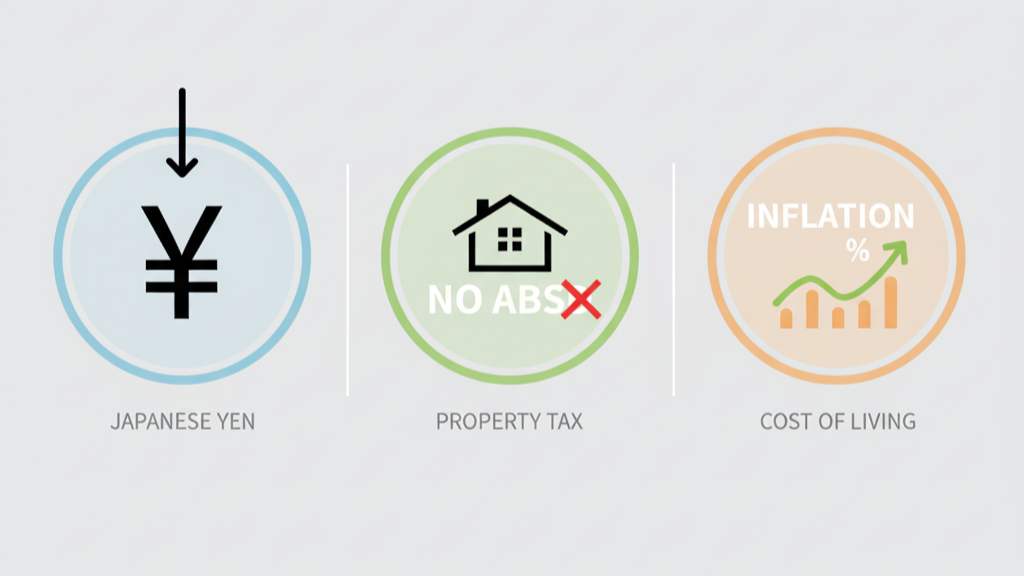
This is the most common question I get. The answer is that multiple, powerful drivers are all happening at once.
-
Currency advantage: The yen has traded at relatively weak levels against the Singapore dollar in recent years, making yen-denominated properties more affordable in SGD terms than at stronger-yen exchange rates. For illustration, a ¥100 million property costs S$1.25 million at ¥80 per S$1, but S$1 million at ¥100 per S$1. Exchange rates can move in either direction, and local property prices still matter.
-
No Additional Buyer’s Stamp Duty (ABSD): This is a huge financial calculation. For Singaporeans who already own property at home, buying a second or third property in Japan is far more capital-efficient. You avoid the high ABSD, freeing up significant capital.
-
Foreign ownership: Foreign individuals can generally purchase Japanese real estate, including freehold land, subject to applicable legal and reporting requirements. That flexibility does not remove the need for title and regulatory checks.
-
A changing economic backdrop: After decades of low inflation, Japan has experienced renewed price and wage pressures. Rental and property-price trends vary sharply between major urban markets and regional areas, so local demand matters more than any single national narrative.
-
Familiarity and Likeability: Singaporeans simply love Japan—the culture, the unparalleled safety, the food, the travel. This high level of comfort and familiarity makes it a much easier and more emotionally satisfying investment decision compared to a less-familiar country.
2. Who Is Buying? Three Profiles of Singaporean Investors
It’s a diverse mix, not a single group. In my experience, we see three main profiles:
-
The “Pure Investor”: These buyers are focused on capital appreciation (especially in Tokyo’s 5 central wards) and/or rental yields (which are often higher in other major cities like Osaka). They see the combination of the weak Yen and Japan’s economic turnaround as a rare, strategic entry point.
-
The “Retiree / Lifestyle” Buyer: This is a distinct and growing profile. These are typically wealthier individuals who have their lives and assets in Singapore “mostly settled.” For them, a property in Japan is a lifestyle asset (a place to spend a few months a year) and a legacy play (a freehold asset to pass down). It also acts as a strategic hedge, diversifying their wealth in a different currency and a stable, G7 nation.
-
The “Parents and Planners”: These are parents buying apartments for their children who are, or will be, attending tertiary studies at top Japanese universities like the University of Tokyo or Waseda. It saves on rent, provides a secure home for their child, and acts as a long-term asset.
While some middle-income buyers are participating, the bulk of the activity comes from those who are already financially established and are looking for diversification.
3. How to Buy Safely: Spotting the “Real Deal” vs. a Scam
You can buy through roadshows, seminars, and specialist agencies in Singapore. The absolute key is due diligence. Here are the “green flags” to look for and the “red flags” to run from.
✅ “Green Flags” (How to Spot the Real Deal)
-
Local demand: Ask what share of buyers and tenants are Japanese residents. A property that appeals to the local market is easier to evaluate independently of overseas sales campaigns. Request supporting resale, leasing and transaction evidence instead of relying solely on marketing claims.
-
Reputable Partners: The agency must have a strong, formal partnership with a major, established Japanese real estate firm (like Tokyu Livable). This provides accountability and trust that they won’t “simply disappear,” which has happened so often in the overseas property space.
-
Full Transparency: They should be upfront about all costs, including taxes, management fees, and potential repair costs.
-
Clear After-Sales Service: They must have a clear process for property management, rental, and legal support.
⛔ “Red Flags” (How to Spot a Scam)
-
Projects marketed mainly to foreign buyers: This warrants extra scrutiny. Check whether Japanese buyers would purchase or rent the property at comparable prices and whether there is a functioning local resale market.
-
Unrealistic guarantees: Be cautious of promises such as “10% guaranteed yield for 10 years.” Ask who provides the guarantee, what happens if that party fails, what rent the open market supports and whether the price includes the cost of the guarantee.
-
High-Pressure Tactics: Being forced to “sign today” or lose a “special discount.” A good investment will still be a good investment next week.
-
Vagueness: If the seller cannot explain the exact location, ownership title, permitted use or full fee schedule, investigate before proceeding.
4. Your Pre-Purchase Checklist: 6 Things to Consider

When someone is planning to buy, I give them this checklist.
-
Ask “Why”: What is your primary goal? Capital gains? Rental income? A holiday home? Your goal determines what and where you buy.
-
Know the “Numbers” (Taxes): You must understand the full tax picture: acquisition tax, fixed asset tax (annual), income tax (on rental), and capital gains tax (on exit).
-
Understand currency risk: A weak yen can help at entry, but it can also reduce SGD rental returns and eventual sale proceeds if it weakens further. Currency direction is uncertain.
-
Financing: Do not assume that advertised low domestic mortgage rates are available to non-resident buyers. Eligibility, interest rates, minimum loans and required documents vary by lender; obtain an actual financing indication before committing.
-
Property Management: Who will manage the property, find tenants, and handle repairs? This is why condos (or our LIDEAS product) are much easier for overseas investors than landed homes, as they have building management.
-
Language & Insurance: Ensure you have a reliable, bilingual partner for contracts and management. For Japan, earthquake and fire insurance are also crucial considerations.
5. An Expert’s View on “Akiyas” (Empty Houses)
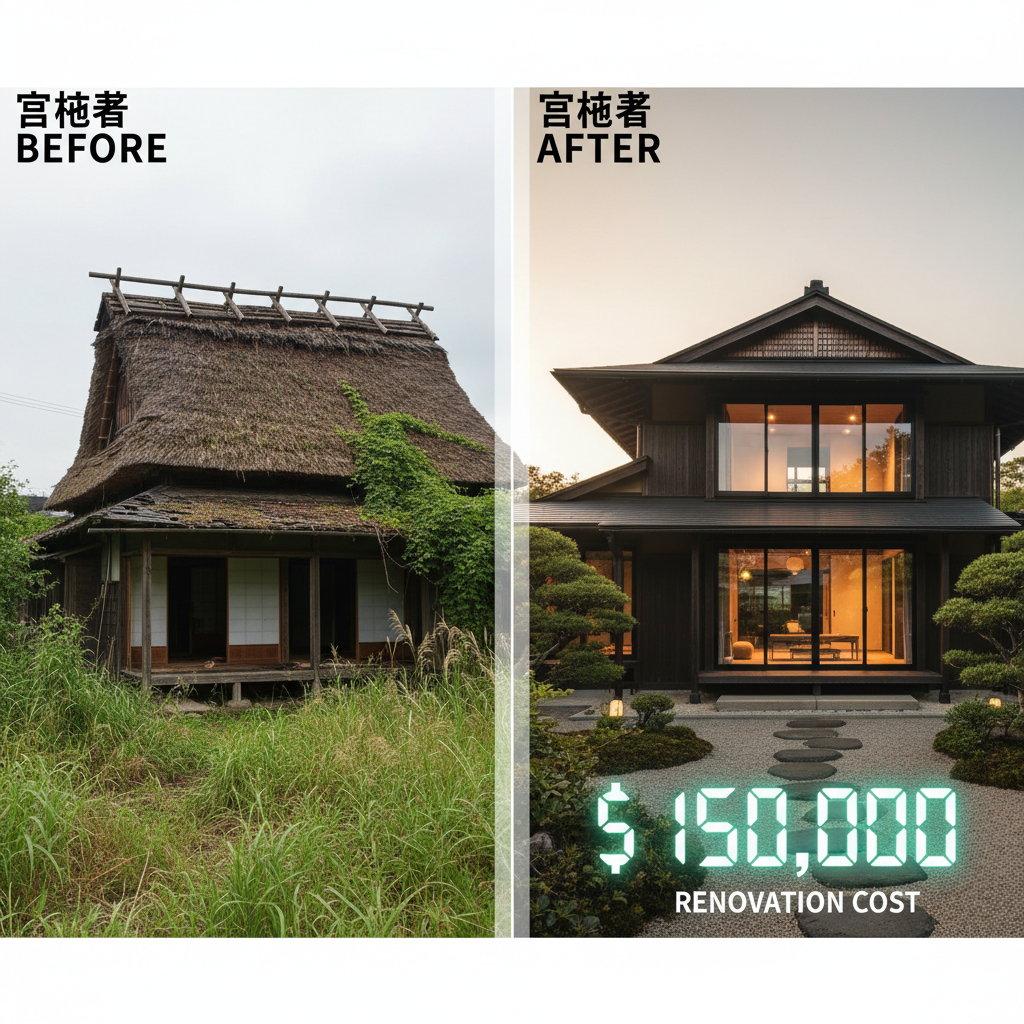
“Akiya” just means “empty house.” There’s a recent trend of foreigners buying these cheap rural homes as potential Airbnb assets, but this is extremely high-risk and not a passive investment.
-
The purchase: A house marketed for S$30,000 may require major renovation. For illustration, extensive works can run into S$80,000–S$150,000 or more depending on structural condition, location, utilities and contractor availability. Never treat these amounts as universal estimates; obtain property-specific quotations.
-
The Risks:
-
Location: Many cheap houses sit in shrinking communities with weak local tenant demand and limited resale liquidity. Identify realistic local buyers before purchasing.
-
Renovation Trap: It’s a “renovation black hole.” Costs can spiral, and finding reliable contractors in the countryside is very difficult.
-
Regulation: Short-term rental rules and licensing can vary by municipality and can change. Confirm the exact permitted use, registration requirements and condominium rules before basing your income model on short stays.
-
In short: an akiya should usually be treated as a hands-on renovation and operating project, not automatically as passive rental investment.
6. The Final Strategy: “Core” (Singapore) vs. “Satellite” (Japan)
I’m often asked, “Is it better to buy overseas or just stay in Singapore?”
This is not an “either/or” question. It’s about strategy.
-
Singapore is your “core”: For many Singaporean households, local property provides a familiar, SGD-denominated foundation with known financing and legal frameworks. It also brings concentration risk, so the right allocation depends on personal circumstances.
-
Overseas is your “Satellite”: An overseas property, like in Japan (especially a top-tier city like Tokyo), is not a replacement for your Singapore base. It is a complement.
The goal is diversification . Japanese property can add exposure to a different geography, currency and property market, and in some cases freehold land ownership. That diversification introduces new risks, particularly in currency, management and liquidity.
For an investor with a suitable financial foundation, Japan may be worth considering as a measured addition to an existing portfolio—not a substitute for careful due diligence and cost analysis.
 Ask Jim